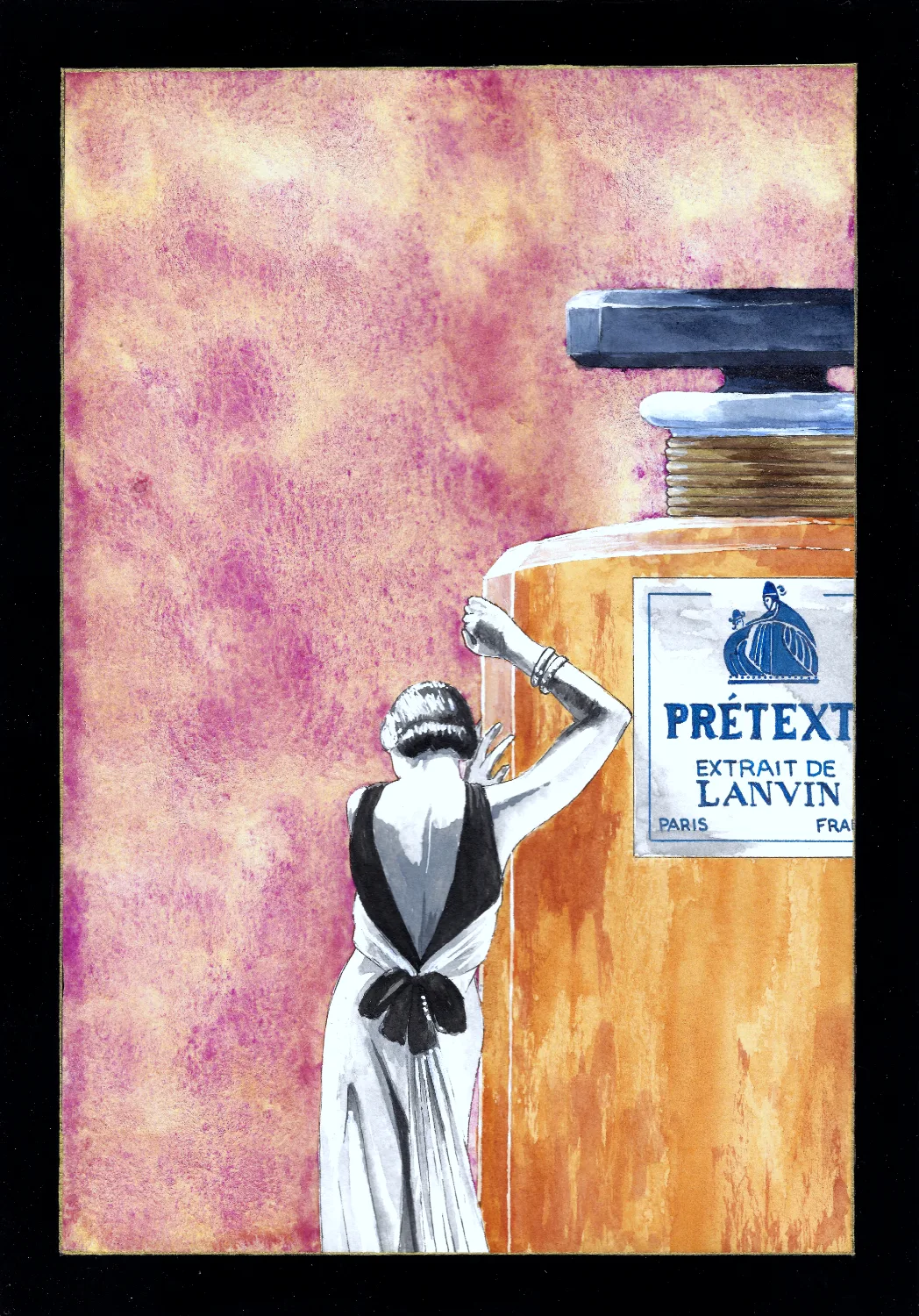
“Elegance is not about being noticed, it’s about being remembered.” – Jeanne Lanvin
The deafening roar of the crowd overtakes you as you step into the market. Surrounding you, a labyrinth of winding stalls and salespeople stands like rocks against the harsh sea of people meandering their way through. Each table offers a new visual delight: some hold shiny baubles, some fine textiles, while others offer a rare assortment of various thrifted goods.
As you wander aimlessly through the storm, you spot a small stall occupying a space near the back. Although chaos reigns around it, the table sits in a clearing of peaceful solitude. Under-decorated and unpretentious, this merchant offers neither frivolous trinkets nor luxurious trappings. In their absence, finely milled powders and bundles of herbs take their place.
As you step closer, each expertly sourced ingredient hits your senses and overwhelms you into a state of comforted bliss. Behind the table stands a tall, confident, and intimidatingly welcoming woman. Her name is Lanvin Prétexte, and she is the spice merchant.
Made in Paris
By the time of Prétexte’s release in 1938, Lanvin was already a well-respected and established house in the French fashion industry. Founded over 130 years ago, Jeanne Lanvin was renowned for her sophisticated and elegant designs. The story behind the house and its founder, Jeanne, is one that is both triumphant and beautiful.
It is a story I have written about in a prior article; click here to read a more in-depth exploration of the house.


Following the successful launch of Rumeur in 1934, Fraysse would begin work on Lanvin’s next major fragrance launch, Prétexte. What he could not know, however, was that this launch would be his final before all of Europe was plunged, again, into the darkness of war. He could not also know that it would be the last fragrance to release during Jeanne Lanvin’s life.
By the time of the launch in 1937, the trajectory of fashion for women had largely remained the same. Just a decade prior, in 1927, Arpège would be released into a market that was eager to embrace the avant-garde and daring. Haute couture was shocking, if a little androgynous. When Prétexte launched, the tone had shifted. The desire to push the boundaries imposed by society was now replaced with the softened glamor of the silver screen.
As many people still struggled in the midst of the Great Depression, the intellectuals and artists (among the wealthy and fashionable) mingled in café society, sharing ideas, debating one another, and of course, seeing and being seen.
In the midst of this, trouble began brewing in Europe. As Spain continued to descend into chaos and Germany’s ruling party ramped up its violence, the hope that had driven the 1920s had officially died.
Many fragrances released at this time used their dense compositions as a source of comfort, a source of strength, and even some as a way to escape. The world Prétexte would launch into was complex and, at times, scary. So what comfort could it offer the market in 1937?
The Secret Spice
As mentioned above, Prétexte was launched in 1937 before being discontinued in the late 1960s to early 1970s.
Over the course of its short time on the market, Prétexte was offered in a variety of concentrations and application methods. In my collection, I am fortunate enough to own three bottles of Prétexte: an aerosol spray of what I believe is an EdT-like concentration, a 1950s extrait, and a small 1960s extrait.
For this review, I will be using my 1960s extrait bottle (not pictured).


Opening and applying Prétexte is an enveloping adventure to another world.
On initial application, Prétexte thrusts at you and grabs you by the throat. The piercingly crystalline quality of the aldehydes hits me first. Breezy, cool, and calculated, the note seems to see right through me. It is viciously bitter (if slightly green), and is only tamed by the addition of a scant few citrus notes. Here, I detect a very light dosage of neroli and bergamot, although they offer no rescue from the silent interrogation. This stage of the composition is as though Prétexte is secluding you from the rest of the world until it decides what to do with, or where to take you.
Just as quickly as Prétexte grabs hold of you, its cold, steely facade melts away, and with it the world around you. In its place, a dense blend of spices and floral notes, all wrapped in the smooth, opaque haze of amber. This wall of notes encroaches in on the wearer, and before you notice it has enveloped your senses. It is intimidating and heavy, but there is a comforting solace in it that rounds out its edges. The first note that stands out on my skin is the myrrh. In Prétexte, it is softly sweetened, warm, and has this smooth-as-silk, balmy quality to it. Its companions seamlessly blend together with the myrrh into what I can only describe as a “veil of mystery.”
That mysterious and unknowable quality is one that Prétexte shares with its older sibling, Rumeur. Although in the Rumeur, that quality represents itself in a femme fatale sort of way. In Prétexte, it feels otherworldly and ethereal.
No matter how opaque the shroud, I can clearly recognize the notes of rose and carnation in the blend. The rose provides an elegant, sophisticated quality to the composition. In contrast, the carnation is spicy and fiery, like the flower itself. They are blended with a beautifully soft powder that blurs the lines of where the notes meet.
As you begin to understand the cloud of powders and spices around you, it dissipates from view. You have now arrived in the world Prétexte has built for you.
This world is hazy, ethereal, and luminously warm. To the senses, it feels sophisticated and unique, while containing a comforting familiarity to it. The first notes that breeze past me are an intensely radiant civet and a very intimate musk. Together, they stand on the edge of feral and civilized, being both animalic and intensely human. Beneath the composition, a decadent selection of powdery, balmy woods serve to ground the entire blend. They share a similar shellacked quality that is found in the other Lanvin fragrances of the time. Finally, lingering through the air like a faint trail of smoke, the wet and inky nuances of oakmoss seem to haunt the composition from the shadows.
It is hard to define what Prétexte is trying to do, and even harder to understand its complexities. It feels as though it is toying with your understanding of how a fragrance can hold secrets, forcing you to constantly search through its blend for something. The truth is that what Prétexte is trying to do is to make you come up with its secrets. All of the Lanvin fragrances have an air of mystery as to how they develop. My Sin chooses to enjoy the toying with your patience as it uncloaks itself, and Rumeur revels in the chase for the truth. Prétexte, on the other hand, does not present some sort of game for you to play, instead allowing your imagination to run wild in its powdery depths. For that reason, it may be the most interesting composition Lanvin ever made.
The Spice of Life
The composition of Prétexte is one that I often attach more somber emotions to, which is very fitting for the reality it launched in. Prétexte was launched in 1937 before being ultimately discontinued in 1969. It was the final fragrance launch for Lanvin before Europe’s descent into war, the final before Jeanne Lanvin’s death, and is the final article in this series.
The actual composition, although less exuberant than some of its peers, is truly not a sad, demure thing. In fact, it is radiant, lush, luxurious, and thought-provoking. The juxtaposition of how it makes me feel and what is in its material content is what makes it so unique, and for that single reason, I think it is the most abstract of the Lanvin masterpieces from that time.
As always, I thank you for reading and I welcome you to leave any thoughts/comments you have down below.
– Zak


Leave a Reply