““In every crowd are certain persons who seem just like the rest, yet they bear amazing messages.”
― Antoine de Saint-Exupéry, Vol de Nuit
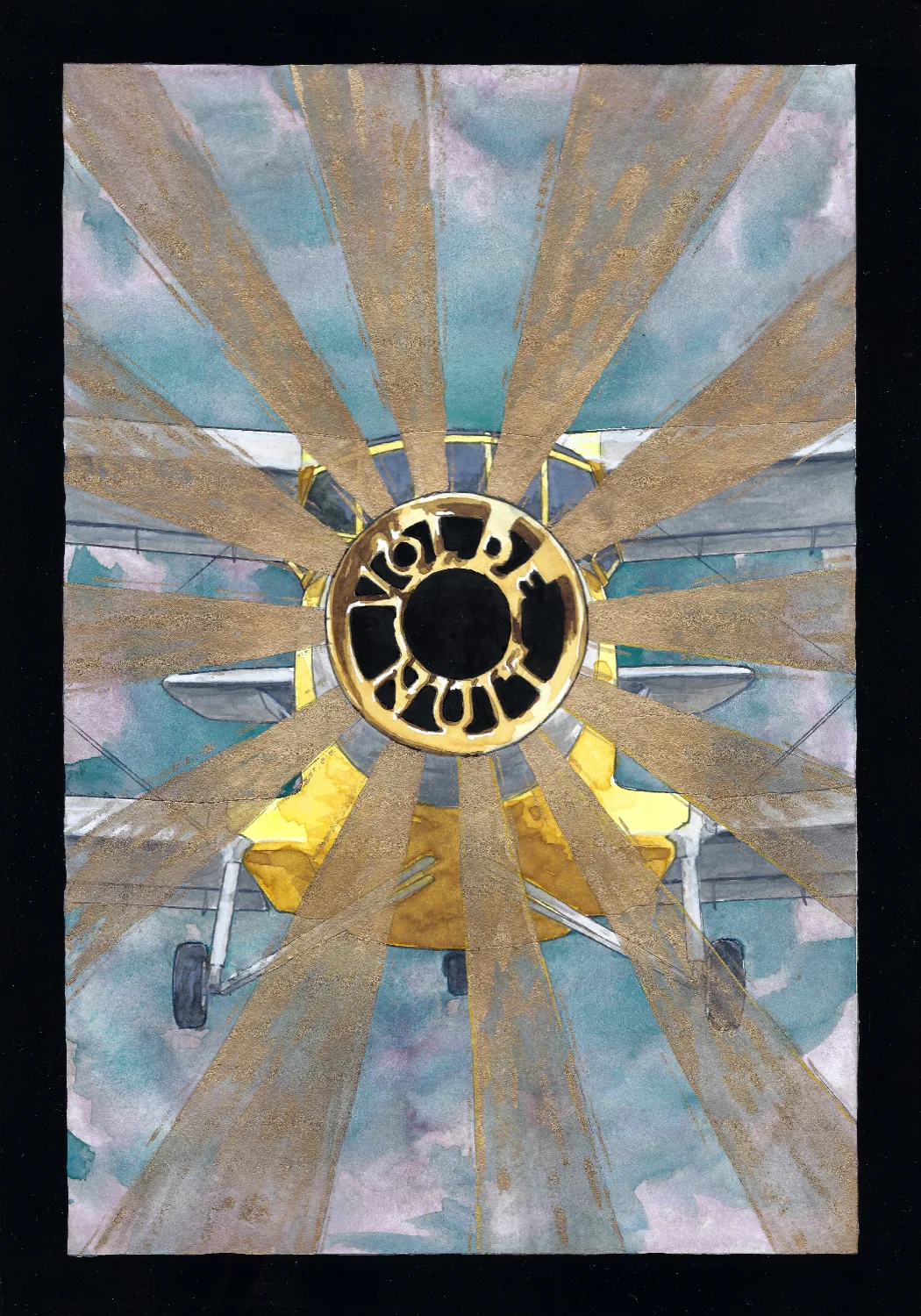
A brisk fall evening, 1931, high above the Andes mountain range. A small aircraft cuts its way through the clouds, unaware of the storm ahead. In the cockpit, a young, newlywed pilot confidently maneuvers the aircraft towards his destination. For years prior, night flights had been considered too dangerous, a fool’s mission. For him and his supervisor, they had something more to prove, and so he left that danger miles away on the ground. In the sky, it was just him and his machine, buffeted by the cuttingly cold night air. The only semblance of humanity being the static and occasional murmurings from his handset radio.
Ahead of him awaits not his destination, but rather the answer to the question: is one man’s life worth it in the pursuit of progress? A hypothetical that he would never be able to ponder, for he was thrust into the reality of it as a rough storm formed just ahead. A storm he would not survive, but the love, and heartbreak, of his newlywed wife would.
The brevity of human life, the heartache loss and love can bring, and our constant sacrifice for progress are all themes written in the famous novel by Antoine de Saint-Exupéry, Vol de Nuit, or Night Flight.
For Jacques Guerlain, these dramatic themes (and name) would serve as the main inspiration behind his 1933 composition, Vol de Nuit.
If you prefer short-form video content, check out my TikTok video review on Vol de Nuit.
A Shot of Lightning
When Vol de Nuit was released in 1933, Guerlain as a company had already become a very well-established brand. Known primarily for their fragrances, they also offered a wide range of cosmetics and skincare that proved successful. Under Jacques Guerlain’s guidance, the company would release multiple breakthrough compositions that still exist to this day.
A rich history, such as the one Guerlain has enjoyed, is best told in its own dedicated article, one I plan to write in the near future, stay tuned.


Having taken over the reins as head perfumer for the company in 1899, Jacques had already released a multitude of successful and iconic compositions. From L’Heure Bleue (1912), Mitsouko (1919), and of course Shalimar in 1925, Jacques had brought the company to new heights under his guidance.
For Vol de Nuit, however, a different kind of height would serve as a part of the inspiration behind the scent. The aforementioned novel and its exploration of the audacity and tenaciousness of man is the most often accredited inspiration for the composition. While true, the role of art and design in form of Art Deco would play its part as well.
Art Deco is an art style that was most popular in the West following the aftermath of World War I, first gaining its name in 1925. Its roots and influences stretch back further and wider than that, with inspiration tracing back to prior movements such as Cubism and Fauvism.
For the world recovering from the aftermath of the first World War, the style was, in a way, a harsh rejection of the old world order that had led them into war. As monarchies fell, and new governing types were tried across Europe, the modern Western world was beginning to form. In other ways, Art Deco was about embracing the future in addition to acknowledging and living within the present. The use of newly industrialized materials and motifs of new technologies drove home a message of mankind conquering all. The colonization of nature and physics in pursuit of progress.
Ironically, this rejection of the old world and pursuit of progress would result in a new kind of opulence. All of those shiny new materials and technologies came at a very real, human price. As the sun set on the Roaring Twenties, and the economic disparity turned into societal instability, that opulence would lead humanity down the same path they walked just 20 years prior.
It is in this world that Vol de Nuit was created; at the intersection of bright and shiny new ideas and the harsh realities of life. A soaring journey into the clouds, where mankind had never gone before, only to end in tragedy.
It is this story that Vol de Nuit tells, and invites you to climb onboard and experience.
Sitting Above the Clouds
Since the release of Vol de Nuit in 1933, the composition has been reformulated and changed many times. Guerlain is fairly adept at keeping their compositions intact, but shift occurs with any reformulation no matter how skilled the perfumer.
In the future, I would like to get my hands on a vintage form of the scent and do a comparison. Until then, I will be using my Extrait bottle, dated to around 2016.
So what does Vol de Nuit smell like?


Applying the dabber to my wrist, Vol de Nuit takes off on its journey.
Right away, the composition envelops you with its complexity. The first note I am hit with is an intensely weighty galbanum, flanked on either side with a rush of bright citrus notes. The combination is both intensely green and crisp, hitting the senses in the same way cold biting wind hits uncovered flesh. Yet, there is a heft behind its punch, and it carries a slightly metallic and bitter quality. Like hot motor oil and exhaust fumes, it is intensely masculine and mechanical. A cold unfeeling machine sitting right in front of you.
Just when you begin to fully get a grasp on what the top notes of the composition is doing, the hazy atmospheric heart wraps itself around your senses. The soft nuances of iris are buffeted by a blend of white florals, resulting in a delicate, if slightly sweet and powdery, mesh that smooths the entire composition. What the heart of Vol de Nuit lacks in depth, it makes up for by lifting the top notes and never allowing them to feel grounded. It feels like you are being carried on soft, slightly dampened clouds, in a constant battle with the top notes for full control.
Beneath this mechanical melodrama lies the true humanity behind Vol de Nuit. Rather than landing the composition and bringing it back down from its heights, it simply joins in. Like a pilot behind the yoke, the base of the composition steers the effect and keeps the entire fragrance balanced and controlled. There is a warm, animalic quality in the base, with a soft musk being the predominate driver of this. On my skin, I also pick up notes of oakmoss, with the slightest hint of leather and possibly the lightest touch of tobacco.
Riveting the entire composition together, the result is a particularly strange composition. Vol de Nuit does not play it safe, instead choosing to push the boundaries and limits, much like the early pilots in aviation. It is not content with simply allowing the wearer to feel pretty, although make no mistake, it is a beautiful fragrance. Rather, it forces you to sit in the cockpit and really feel the cold metal around you, and to attempt to tame the beast ahead of you. A beast that is always just within your control, but can snap back at the blink of an eye.
The World’s End
In a way, Vol de Nuit echoes the same melancholy, calm-before-the-storm themes of Jacques Guerlain’s earlier composition, L’Heure Bleue. The rapid technological ascent of mankind during that time was equal parts wondrous, as they were naive. An ascent to desperately escape the debts of its achievements.
Like the pilot in the novel, Vol de Nuit never comes back in for a landing. The world it took off from no longer exists; instead, it finds its home in the clouds. Slowly, it sails away, losing its strength until it vanishes behind its atmospheric composition, leaving the wearer, and the rest of the world, in its cold mechanical wake.
As always, thank you for reading, and I welcome you to please share your memories in the comments below.
– Zak
Leave a Reply