“Cuba is such a beautiful country, and everywhere you go, there’s music and people dancing – especially in Havana”
– Julia Sawalha
On a late spring day in interwar Paris, a blanket of warm golden rays washes across the city streets. The machine-like rhythm of the city begins to lull, as the inhabitants end their days and return home to settle in for the evening. For some, however, their day has only just begun.
In an apartment overlooking the city streets, a young and energetic woman is quickly preparing herself for the night ahead. She runs back and forth as she compares dresses, perfects her hair, and frantically puts the final touches on her makeup. A whirlwind of energy in a sea of calm tranquility. As she finishes her ensemble, she reaches for one final touch of glamor before she heads out for the evening.
A small, black lacquered glass bottle sits in her grasp, the sides embossed with Greco-Roman inspired reliefs, and the liquid inside infused with an unimaginably fiery passion. She quickly applies the liquid onto her pulse points, then rushes out of her apartment to the world that awaits her with open arms.
When she opens the door, what awaits is a whole new world. She may live in Paris during the day, but tonight she is dancing in Havana.
From Grasse with Love
Having been founded in 1849, Molinard has long established itself in the French fragrance industry. Throughout its history, the house has been well-known for their soliflores, exquisite bottle designs, and the launching of novel and revolutionary products. They pioneered, in 1921, the world’s first solid perfume, named Concréta.
However, Concréta was not the only important launch in 1921 for Molinard.


In the years leading up to WWI, in part due to the Industrial Revolution in the prior century, many advancements in science and technology had been discovered. New manufacturing techniques, new materials, and new ideas filled the air as the tensions of war grew too fierce to ignore.
When war broke out in 1914, it traumatically and forcibly ended the Edwardian period, and seemingly the advancements seen during it. Yet, in the immediate aftermath of the war, the world leapt forward once more. Production lines originally intended to supply the war effort were repurposed to serve the consumer market; once novel and expensive materials and technology became mass produced and sold in stores across the globe.
This explosion in new and unique consumer goods and technology not only made life easier, but led to a rewriting of societal norms entirely. In particular, women having played a key role in the war effort, were choosing new paths for themselves and redefining what womanhood meant. The modern woman of the interwar period had infinitely more time and more status than she did only a few years prior. By 1920, the term “flapper” began showing up in writing, and calls for women’s suffrage found good footing. These pioneering women overturned the traditional Victorian ideals, and in their place a freer, more alive idea of womanhood would blossom.
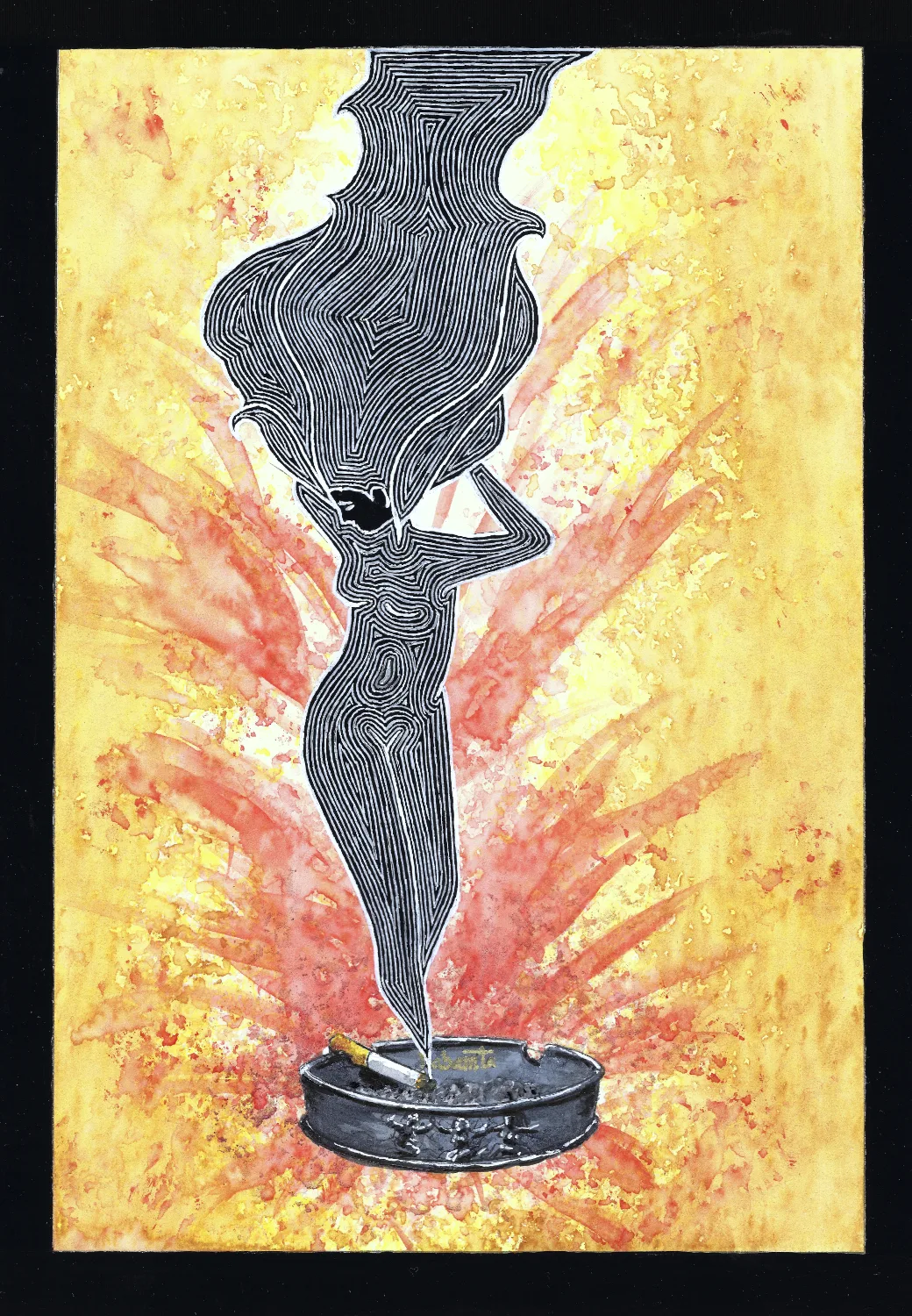
It is this brave new world Habanita would be born into. When it was launched in 1921, it was originally intended as an accessory for cigarette smoking. Sold in either a sachet or as a liquid, Habanita would effervescently tint the smoke with its rich haze. Later, the scent would prove popular enough on its own that in 1924 it was launched as a stand-alone fragrance.
Now, over 100 years since its launch, Habanita has become nearly synonymous with the roaring 20s and the interwar period. How does that translate to the world today?
The Most Tenacious Perfume in the World
Since its release in 1921, Habanita has undergone a wide range of changes throughout its time on the market.
According to many collectors and blogs (Kafkaesque and I Smell Therefore I am, to name a few), the most significant changes to Habanita occurred first in the 1980s, and then again in 2012. In my collection, I own two bottles of Habanita, a 1980s EdT and a current, post-2012 EdP.
For this review, I will be using the 1980s EdT.


The opening of Habanita feels as though you are stepping out onto a warmly lit night street in Havana. The dazzling lights, the slowly fading heat and humidity, and the drifting scent of a beautifully cultured tropical city.
As you stand in the street, the evening breeze slowly drifts by, and picks up a soft trail of smoke. The first notes that hit the senses are strangely acrid and smoky, nearly incense-like; the notes drift away with the breeze, their source yet to be determined. As they drift by, a prelude to the glory that is to be discovered, you find yourself standing in a market surrounded by stalls of fruits, amongst other delectable foods and goods. At the start, a very soft citrus note is complemented by the tender and juicy embrace of peach, as well as the sweet and tangy notes of raspberry. On my skin, I also detect the slightest hint of strawberry? Individually, these notes would be strong enough to stand alone, here though they mesh and blend together in a way that simply teases the appetite. An appetizer for the main course to come.
As the soft breeze picks up, the trail of sweetened smoke continues to pull you further, past the stalls of berries and fruits, and towards an outdoor garden. Here, the heart of Habanita blooms.
In this garden, Habanita boasts a bouquet of rich and tropical ylang-ylang, a powerful rose, a tinge of white florals, and the powdery facets of heliotrope. On my skin, I also detect a faint hint of violet, which adds a slightly sweet and powdery note that is similar to Caron’s much later Aimez-Moi (1996). In full bloom, the bouquet of Habanita is stunningly beautiful, but does not feel fresh and spring-like. Rather, it feels hot, humid, languid, and slightly wilted in their presentation. Having said that, they don’t feel exhausted and dead. No, this is their final show, and they saved the last of their bloom for you. As you bask in their swan song, they slowly die before your senses, and in their place is the smoldering and dense base that Habanita is known for.
Although Habanita is forever interlinked with tobacco, that smoky trail belies its true origins. Warm balmy notes of amber and resins, combined with an intensely smooth, nearly bitter-sweet vanilla note displace the air around you. In their wake, soft musk, a heavy dose of powder, and something animalic and funky, civet perhaps? When combined together, they form not just a base for Habanita, but a soul. That soulful spirit of Habanita is what sets it apart from other compositions of its time. It doesn’t wait for you to discover it, instead it presents its entire lifeforce to you from the very beginning. It catches you off guard throughout all aspects of its structure, and leads you into its web before smothering you in its hot and fiery passion.
As you lull yourself to sleep in its smooth, warm, and comforting embrace, Habanita snaps you back into reality. No matter how close its namesake city might have seemed, it was always just an illusion that remained far out of reach. The shocking truth behind Habanita is that it only represents the idea of Havana, an idea not formed on its beaches but on the streets of Grasse. Every note, smoothed over and filtered behind a haze of warmth and decadence. Hours later, when Habanita has finished having its fun with your senses, it drops you back in the real world. The trailing scent of smoke the only thing left to remember it by.
Habanita through the night, but back in Paris by the morning.
The Morning After
The wiles of Habanita have earned it a reputation in the fragrance world, and its mythos has ensured its place in history as one of the greats. In a way, Habanita is a bottled 1920s femme fatale with a bleeding heart, and it cannot wait to show you.
Habanita to this day remains Molinard’s most famous fragrance release, and is a fragrance that is held in high regard in the fragrance community at large. As mentioned before, the composition has undergone many changes since its original 1921/24 release. As an aside to this review, the current post-2012 EdP formula is genuinely excellent. I love the vintage I own and have reviewed here, however the newer EdP is more wearable, and in some ways more enjoyable to me. Molinard has kept Habanita beautiful for over 100 years, and here is hoping for 100 more.
As always, I hope you have enjoyed this review of Habanita and I encourage you to share your thoughts/memories in the comment section. Until next time, wishing you all the best.
– Zak
Related
-
Dioressence – The Forgotten Verdant Oasis
“Make me a fragrance that smells like love“ – Christian Dior Lost in thought, you wander the grounds of a sprawling countryside estate. Perfectly cared-for shrubbery and well-manicured lawns are kept magnificently trimmed and cultivated by a team of expert gardeners. Every plant and flower they touch is precisely arranged in a masterpiece of human…
-
Molinard Habanita – A Night in Havana
“Cuba is such a beautiful country, and everywhere you go, there’s music and people dancing – especially in Havana” – Julia Sawalha On a late spring day in interwar Paris, a blanket of warm golden rays washes across the city streets. The machine-like rhythm of the city begins to lull, as the inhabitants end their…
-
Lanvin Prétexte – The Spice Merchant
“Elegance is not about being noticed, it’s about being remembered.” – Jeanne Lanvin The deafening roar of the crowd overtakes you as you step into the market. Surrounding you, a labyrinth of winding stalls and salespeople stands like rocks against the harsh sea of people meandering their way through. Each table offers a new visual…