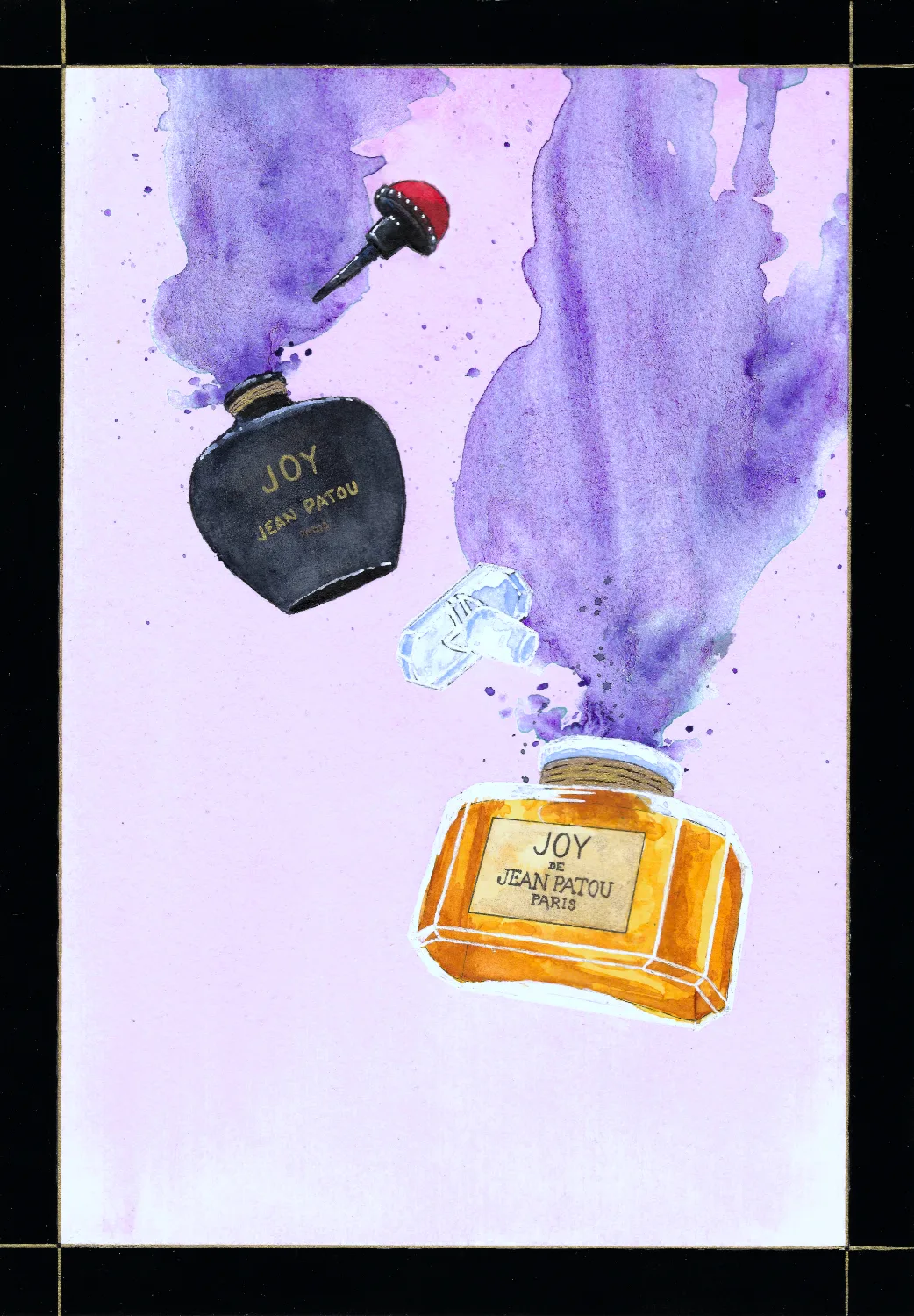
“Just like men, perfume is never perfect right away; you have to let it seduce you.” – Jean Patou
Inside an old theater, a crowd of patrons make their way to their seats. As they wait patiently for the movie to start, the feeling of worn cloth seats wrap around them, while the smell of popcorn wafts through the air. Some have been anxiously anticipating this movie for months; others have been dragged here by their friends. As the lights dim, for the next few hours, they all will, to a degree, experience the emotional highs and lows only true art can deliver.
Truly great art accomplishes something more than just being a pretty painting on the wall, or an enjoyable summer blockbuster. It goes beyond beauty and makes whomever happens to experience it feel something. The ability to convey and transfer those emotions and thoughts in an abstract way is what makes people so human.
Art affects us through our senses, and one of the most powerful ones is our olfactory system. Not only does scent have a direct connection to our memory, but it also intertwines itself with our emotions as well. Fragrances have nothing to say, stand for nothing, and have no visual identity beyond packaging. Yet, these abstract compositions are able to cut straight through our senses and change our core emotions with every single breath.
When Joy was commissioned, Jean Patou set out to delivery a small amount of happiness to his clientele. How did he achieve that?
The Most Elegant Man in Europe
The story behind Joy and how it came to this world begins not with just the composition, but with the house that launched it.
On this blog I have covered some of history’s greatest and most innovative designers (Coco Chanel and Jeanne Lanvin as of now). One designer I have not yet touched on was a man who not only rivaled the greats, but made a lasting impact on the world of fashion, and fragrance.
The interwar period saw a rise in some of history’s greatest and most innovative designers to ever exist. Chanel, Lanvin, and Gucci are amongst many that cemented their legacy during this radical decade of change. Their was one designer who has been often forgotten to time. A man who not only rivaled the greats, but made a lasting impact on the world of fashion and fragrance. That man was Jean Patou.
Patou was born in Paris in 1887; his father was a leather-worker and his mother a housewife. Patou originally trained working in the fur industry before founding his eponymous couture house in 1914, right at the outbreak of war. During WWI, his house would go on hiatus, as he was called to military service. Once the war was over, Patou would return to his couture house with a renewed energy and vigor. He saw a changing world, and with it he decided to have a hand in furthering that change.
Throughout the following decade, the couture house would crescendo in popularity amongst the fashionable elite of Paris. Soon enough, Patou was attracting the attention of not only all of Europe, but the also brave, experimental, and wealthy Americans who were eager to try new trends. Trends that Patou was at the forefront of.
Sadly, in 1936, Patou’s genius would come to an end. At the young age of 48, Jean Patou passed away of a cerebral hemorrhage. In his short life, he revolutionized women’s fashion forever. The story of his house and what happened after his death is supremely interesting, but I will save that for as future more in-depth article.
But where does Joy fit in this story?


Early in his career, Jean Patou understood the important connection between perfumery and style. In collaboration with his newly hired in-house perfumer, Henri Almeras, Patou would launch his first fragrance collection in 1925. From there, the house would follow with a long list of new, novel, and boundary pushing releases. One notable example was a portable perfume “cocktail bar” which allowed clients to experiment and mix their own fragrances.
By 1929, the United States would be rocked to its core with the stock market crash that October. Soon enough, the whole western world would be plunged into economic turmoil with the onset of the Great Depression. The consumer market for luxury haute couture shrank considerably, especially with Patou’s once wealthy American clientele.
This would be the context that would inspire Almeras in his creation of Joy. As wallets tightened, Joy offered Patou’s clientele a way to enjoy a bit of luxury during the economic crisis. No less extravagant than the house’s couture, Joy was composed of 10,000 jasmine flowers and over 300 roses (amongst other notes) to produce one single ounce. As a result, Joy became known (and sold) as the “costliest fragrance in the world.”
But what depths lie in this lavish composition?
A Drop of Joy
Originally composed in 1930, Joy is recognized not only as a landmark, but also as one of the best floral compositions ever produced.
Throughout its history, little changed in its formula until the house itself was purchased in the early 2000s. For this review, I will be using the only extrait I have that is opened. A .25 fl oz bottle in the classic red and black flacon dated to 1967.
Now, finally, let’s explore this legendary composition.


Joy is the perfect representation of a small, happy slice of life.
It begins in a serene, beautifully cultivated garden on a perfect spring day. The weather is blissfully warm, the birds are singing, and grasped in your hands is a bundle of fresh-cut flowers destined for a vase. Radiant, gleaming, and crisp, the first notes I am hit with are aldehydes and greenery. The aldehydes here are strong and clean, but they do not strike the senses in the same way the aldehydes in No. 5 or Fleurs de Rocaille do. Where in those compositions the aldehydes can come off as soapy, in Joy the aldehydes complement the green notes perfectly. Together, the two waft through the entire composition like a true breath of fresh air.
As you bring the bouquet inside, the notes of the actual flowers begin to wrap their calming bliss around you. It is at the heart of Joy where the composition begins to match its name. The vivid ecstasy of the jasmine and roses completely overtakes the profile. Like a cascade of over 10,000 petals has been softly dropped over you, each one gently brushing your skin as they make their descent. They are joined by a lush and dense menagerie of various white florals that add an effervescence to the arrangement. On me, I particularly pick up a hint of tuberose and a good dose of lily of the valley. Altogether, the heart is somehow powdery, slightly ripe, and indolic, yet also fresh and crisp. It is a dichotomy that keeps Joy shockingly modern for its era.
To further cement the lush heart of Joy, the base takes a far back seat in the composition. It is there, adding depth and a hint of warmth, with a slight animalic edge from the musky civet. It is, however, buried under all those petals and really does not stand out on me. I believe that is the point, though, as if it were anything else, it would detract from what is above it.
Joy feels like it not only envelopes you but wraps the whole world with its tranquility. Studies have shown that the simple presence of flowers can boost one’s mood and relieve stress, and Joy can be used as evidence of that. Wearing Joy feels as though one is sitting next to the most beautiful bouquet of flowers. It washes away all negativity and beckons you to sit with it for a while and relax.
Just as that stillness would have been appreciated in the instability of the 1930s, so too is it appreciated now.
The Joy of Life, the Inevitability of Death
Joy was a landmark composition when it was released, and served as a benchmark for all florals that came after to be compared to. Its beauty is in Jean Patou’s dedication to having the finest composition of the highest quality ingredients. In the process, Joy delights all who encounter it, and spends its hours helping to melt away the worst the world has to throw.
Joy was released in 1930, and for the decades that followed, it remained one of the top selling fragrances in the industry. The wealthy elite, celebrities, and normal everyday women all enjoyed the strengths that Joy had to offer. Most notably, Jackie Kennedy was known to have made it her signature scent.
As time has gone on, however, tastes and trends have shifted. By the 2010s, Jean Patou had been sold multiple times, and its classic compositions reformulated numerous times. By the end of the decade, LVMH bought out the company and ended production of all Jean Patou fragrances, bringing an end to a nearly 100 year old masterpiece.
I suppose, in a way, Joy has become a great reminder that we should find happiness and appreciate all of life’s fleeting moments. It is what Jean Patou himself would have wanted.
As always, thank you for reading, and I welcome you to please share any experiences/memories you have of Joy.
– Zak
Gallery


Leave a Reply